By Peachy Magistrado | Vancouver City News | November 5, 2026 Editor: Karalee Greer Subscription to Vancouver City News is Free Being a Contributor is Free
Protein isn't just for athletes. For older adults, getting enough can help maintain muscle strength, mobility and independence.
When we think about healthy eating for seniors, we often focus on fruits, vegetables, fibre and drinking enough water.
But there's another important nutrient that sometimes gets overlooked.
Protein.
Whether an older adult enjoys walking through a neighbourhood park, gardening, swimming or simply getting up from a favourite chair, healthy muscles help make those everyday activities possible.
And as we grow older, maintaining muscle strength becomes increasingly important.
For seniors and families throughout the Lower Mainland, understanding how much protein to eat and where to find it can be a practical step toward healthy aging.
Why Protein Matters More as We Age
Our bodies naturally change with age.
One important change is the gradual loss of muscle mass and strength, a process that can contribute to reduced mobility and difficulty performing everyday activities.
Protein supplies the building blocks our bodies use to maintain and repair muscles and other tissues.
But eating protein alone isn't enough.
Regular physical activity, particularly exercises that strengthen muscles, also plays an important role.
Together, good nutrition and appropriate exercise can help older adults maintain the strength needed for daily living.
This matters whether someone is an active 65-year-old or an 85-year-old who wants to continue living comfortably at home.
How Much Protein Do Seniors Need?
Canada's general recommended dietary allowance for protein is 0.8 grams per kilogram of body weight per day for adults.
However, some expert groups recommend higher amounts for healthy older adults, often around 1.0 to 1.2 grams per kilogram daily, to help support muscle health.
For example, an older adult weighing 70 kilograms, approximately 154 pounds, would need:
- 56 grams daily using the general Canadian recommended dietary allowance.
- 70–84 grams daily using the higher range suggested by some older-adult nutrition experts.
These are general reference amounts, not individual prescriptions.
Protein requirements vary with health, activity level and medical conditions. People with kidney disease or other conditions affecting protein needs should discuss their intake with a registered dietitian or healthcare professional before making major changes.
It's Not Just How Much You Eat
One common challenge is that some seniors eat very little protein at breakfast or lunch, then have most of it at dinner.
A breakfast of toast and coffee may be convenient, but it provides relatively little protein.
Adding an egg, Greek yogurt, cottage cheese or another protein-rich food can make breakfast more nourishing.
Rather than relying on one large serving at dinner, including protein-rich foods throughout the day can make it easier to meet daily needs.
The goal isn't complicated meal planning.
It's making small improvements to familiar meals.
Six Easy Protein-Rich Meals for Seniors
Healthy meals don't have to be expensive or difficult to prepare.
1. Scrambled Eggs With Vegetables
Eggs provide high-quality protein and are easy to prepare. Add spinach, mushrooms or tomatoes for extra nutrients.
2. Lentil and Vegetable Soup
Lentils offer plant-based protein and fibre. Combine them with carrots, celery, onions and leafy greens for a filling meal.
3. Salmon With Roasted Vegetables
Salmon provides protein and omega-3 fats. Serve with potatoes, brown rice or quinoa and seasonal vegetables.
4. Greek Yogurt With Berries and Nuts
Plain Greek yogurt is a convenient source of protein. Add berries and chopped nuts for a simple breakfast or snack.
5. Chicken and Quinoa Bowl
Combine cooked chicken, quinoa and vegetables with olive oil and lemon for a balanced lunch.
6. Tofu and Vegetable Stir-Fry
Tofu is a useful plant-based protein source. Cook with colourful vegetables and serve over rice.
For seniors with chewing or swallowing difficulties, food textures may need to be adjusted with guidance from an appropriate health professional.
What About Protein Supplements?
Protein powders, shakes and bars are widely advertised, but most older adults do not automatically need them.
Regular foods such as eggs, dairy products, fish, poultry, tofu, beans and lentils can provide substantial amounts of protein.
Supplements may be useful when someone has a poor appetite, difficulty eating enough or increased nutritional needs.
However, they should complement a balanced diet rather than routinely replace meals.
A registered dietitian can help determine whether a supplement is appropriate.
How Home Care Can Help
For some older adults, the challenge isn't knowing what to eat.
It's preparing the food.
Grocery shopping may become difficult. Standing at the kitchen counter can be tiring. Cooking for one person may feel less enjoyable than preparing meals for a family.
This is where personalized home care can make a difference.
At Peachtacular Home Health Care, we recognize that good nutrition is connected to independence, dignity and everyday quality of life.
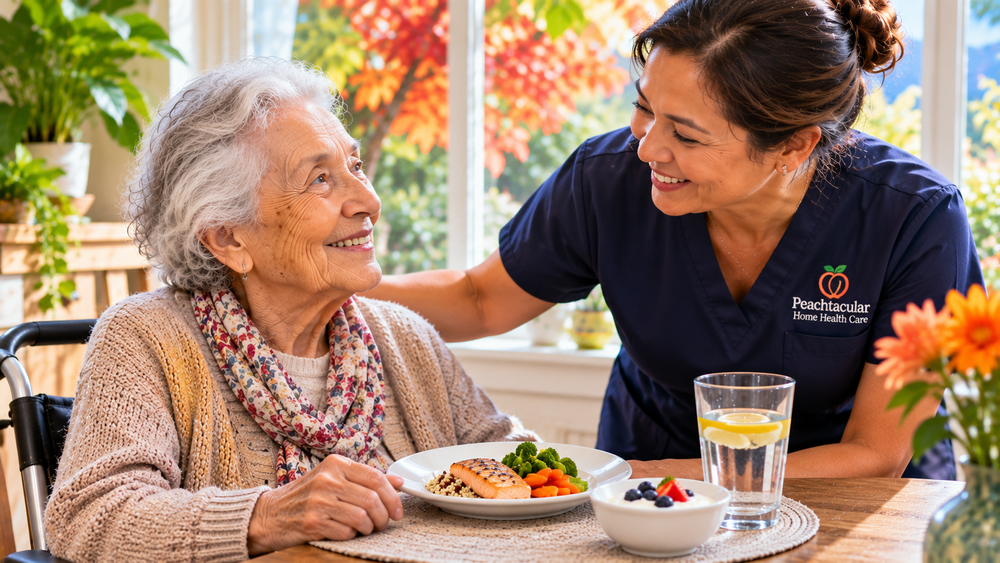
Caregivers can assist with grocery shopping, meal preparation and maintaining familiar eating routines.
They can also help make mealtimes more enjoyable through conversation and companionship.
A caregiver's role is to support an individual's established dietary plan and preferences. Medical nutrition advice and treatment of nutritional deficiencies should come from qualified healthcare professionals.
Why It Matters
Across the Lower Mainland, many older adults want the same thing: to remain active, enjoy their favourite activities and live independently for as long as possible.
Nutrition is one important part of making that possible.
Getting enough protein, staying physically active and maintaining social connections can all contribute to healthier aging.
Families don't need to completely change an older parent's diet overnight.
Sometimes progress begins with something as simple as adding an egg to breakfast, preparing a pot of lentil soup or sharing a nutritious meal together.
Because maintaining strength isn't just about muscles. It's about preserving the freedom to enjoy everyday life.
About The Author
By Peachy Magistrado | Vancouver City News Founder | Peachtacular Home Health Care 🌐 Website: https://peachtacularhhc.com
I believe every senior deserves compassionate, respectful care that promotes dignity, independence, and quality of life. My goal is to help families find personalized home care solutions that allow their loved ones to remain safe, comfortable, and supported in the place they call home.
Peachy Magistrado is the founder of Peachtacular Home Health Care, where she works with seniors and their families to provide personalized home-care support focused on dignity, independence, safety and quality of life.
Editor: Karalee Greer Subscription to Vancouver City News is Free Being a Contributor is Free
Tags: #Vancouver City News #Peachy Magistrado #Senior Nutrition #Healthy Aging #Senior Care #Home Care #Independent Living #Healthy Eating
Sources
- Peachtacular Home Health Care — Protein-Packed Meals for Active Seniors
- Health Canada — Dietary Reference Intakes for Macronutrients
- Health Canada — Canada's Food Guide: Protein Foods
- HealthLink BC — Protein and Your Health
- PROT-AGE Study Group — Evidence-Based Recommendations for Optimal Dietary Protein Intake in Older People
- National Institute on Aging — Healthy Eating As You Age