Karalee Greer | Vancouver News | March 25, 2026
Subscription to Vancouver News and being a Contributor is Free.
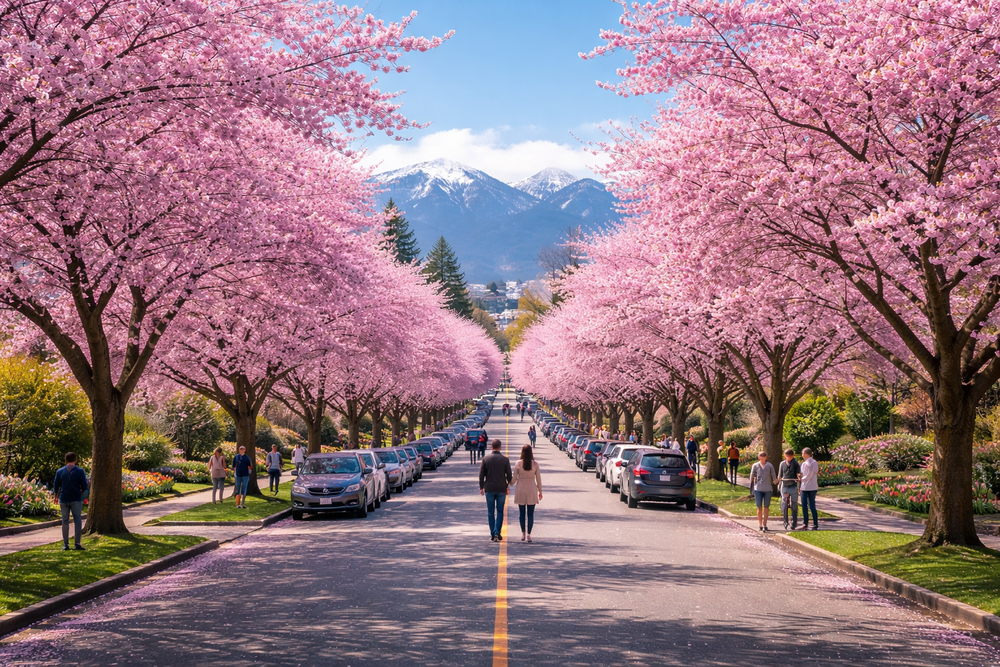
Vancouver’s iconic cherry blossoms are more than a seasonal attraction, they are the result of a historic international gift that continues to shape the city’s identity, tourism, and local economy.
In 1930, the mayors of Yokohama and Kobe sent 500 cherry trees to Vancouver in honour of Japanese Canadian veterans of the First World War. The trees were planted in prominent public spaces, including Stanley Park and Queen Elizabeth Park, establishing what would become one of the city’s most recognizable seasonal features.
Over the decades, that original gesture has grown into a defining element of Vancouver’s urban landscape. Today, the city is home to more than 40,000 cherry trees, attracting residents and visitors each spring. The Vancouver Cherry Blossom Festival has evolved into a major annual event, drawing significant foot traffic and supporting local businesses across multiple neighbourhoods.
Looking to Reduce Your Credit Card Fees? Click here
From a business perspective, cherry blossom season delivers a measurable boost to Vancouver’s local economy. Areas such as Kitsilano, the West End, and Downtown Vancouver experience increased activity as visitors seek out peak bloom locations. Cafés, restaurants, retail shops, and tourism operators often see higher demand, particularly during the narrow window of peak bloom.
While Vancouver’s cherry blossom season stems from a historic gift, it also reflects Japan’s long-standing tradition of Hanami — the practice of gathering to view and celebrate cherry blossoms each spring. In cities such as Tokyo and Kyoto, Hanami attracts millions of people annually and generates substantial economic activity across hospitality, transportation, and retail sectors. This parallel highlights how a cultural tradition can travel across borders and become embedded in a new urban context.
Beyond economics, the cherry blossoms represent a deeper story of cultural connection and continuity. What began as a diplomatic gesture has evolved into a shared cultural experience that continues to bring communities together nearly a century later.
As Vancouver grows, the cherry blossoms offer a model for how cities can integrate history, culture, and nature into their development. They are not only a visual landmark but also a lasting symbol of international friendship and a recurring driver of seasonal economic activity.
Series Note
This article is Part 1 of the series Gardens of Vancouver: Nature, Culture, and the Stories That Shaped the City, exploring the history, cultural significance, and economic impact of Vancouver’s most important green spaces.
Editor: Karalee Greer LinkedIn: https://www.linkedin.com/in/karalee/ Subscription to WBN and being a Contributor is Free
Tags: #WBN News Vancouver #Vancouver Tourism #Support Local Business #Karalee Greer #Vancouver History