Karalee Greer | Vancouver News | April 20, 2026
Subscription to Vancouver News and being a Contributor is Free.
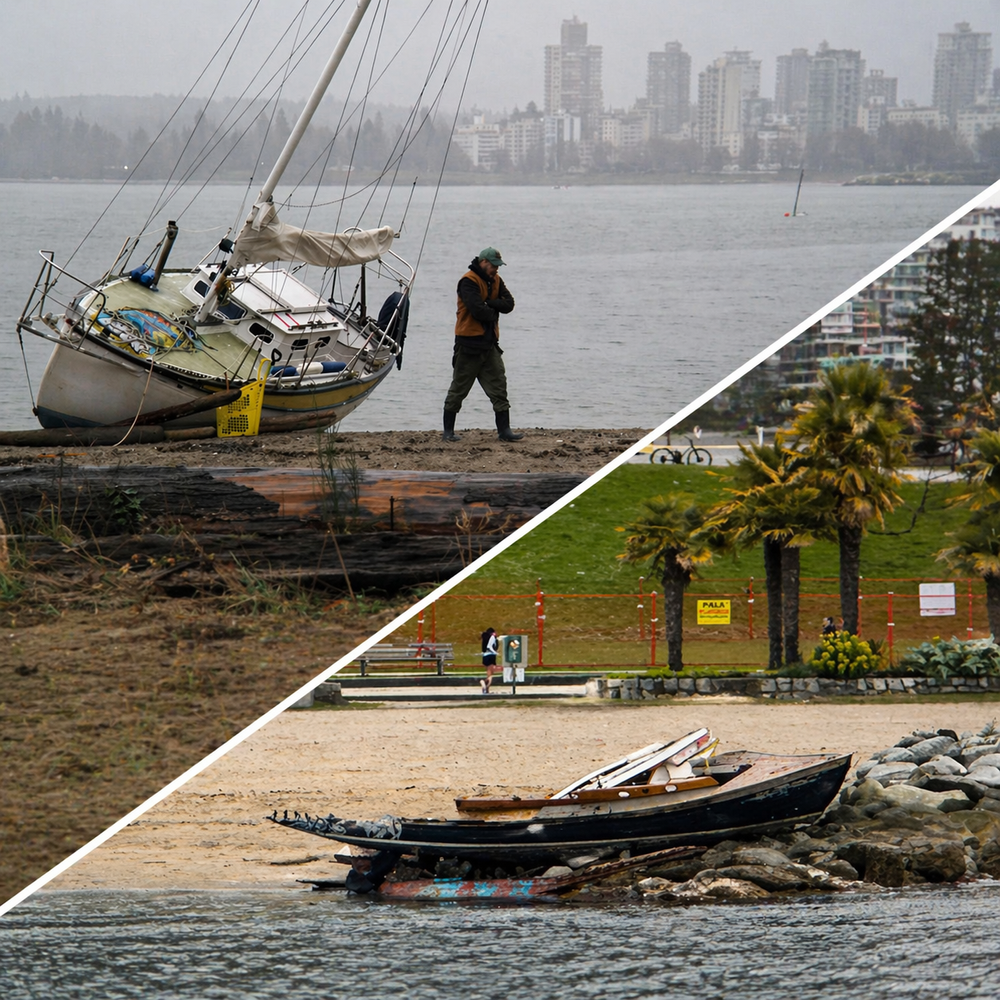
Winter storms are nothing new in Vancouver, but along the shoreline between Kitsilano Beach and the entrance to False Creek, their aftermath is becoming increasingly hard to ignore.
After strong wind events, it’s not unusual to see sailboats and small vessels pushed off anchor and onto the shoreline—resting on rocks or sand along Kits Beach, and across the water on the north side of the False Creek entrance. For residents, boaters, and regular walkers, the pattern has become familiar: another storm, another grounded vessel, and another question about how long it will remain.
This stretch of water is a known anchorage zone for a mix of vessels, including liveaboards and transient boats. While many are well-maintained, others are older or lightly secured. When winter storms move through, particularly with strong outflow winds, even properly set anchors can drag. For vessels with aging equipment or minimal oversight, the risk is significantly higher.
According to Transport Canada, vessel owners are responsible for ensuring their boats are safely secured and maintained, including when anchored. However, enforcement in open anchorages can be limited, and conditions can change quickly during severe weather.
Looking to Reduce Your Credit Card Fees? Click here
Once a vessel breaks free, the consequences are immediate. Boats can go aground along the Kitsilano shoreline or be pushed toward the rocky edges near the False Creek entrance, creating safety concerns and, in some cases, environmental risk. The Canadian Coast Guard prioritizes incidents based on urgency—particularly fuel leaks or navigational hazards—which means not every grounded vessel is treated as an emergency.
That helps explain why some boats remain in place for weeks or even months.
Federal legislation such as the Wrecked, Abandoned or Hazardous Vessels Act provides authorities with tools to address problem vessels, including removal and enforcement measures. But in practice, identifying ownership, assessing risk, and coordinating removal can take time.
In the meantime, grounded boats become part of the landscape, an inescapable visible reminder of a system that often moves slower than the changing seasons.
For a city like Vancouver, where the waterfront is central to daily life, the issue goes beyond inconvenience. It reflects a broader challenge around how shared coastal spaces are used, monitored, and protected.
And along the shores of Kitsilano and the entrance to False Creek, it’s a pattern that continues to repeat with each passing storm.
Editor: Karalee Greer
LinkedIn: https://www.linkedin.com/in/karalee/
Subscription to Vancouver News and being a Contributor is Free.
Tags: #Vancouver City News #Kitsilano #False Creek #Karalee Greer #Recreational Boating #Vancouver Beaches #Community News