
Vancouver's 2026 Potential Business Goldmine
How Vancouver businesses can profit from FIFA 2026. Real strategies from host cities: restaurants, hotels, Airbnb & transit prepare for millions.

How Vancouver businesses can profit from FIFA 2026. Real strategies from host cities: restaurants, hotels, Airbnb & transit prepare for millions.
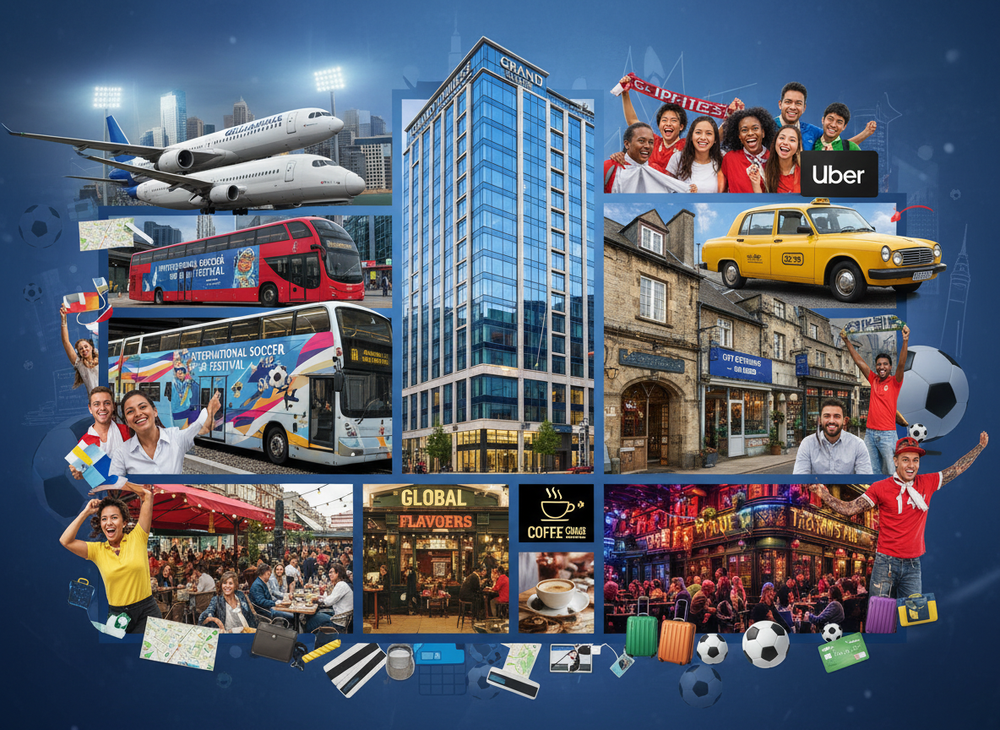
By: Elke Porter from Vancouver, BC — As nearly 10 million visitors prepare to head to 11 U.S. cities for the FIFA World Cup 2026, businesses across North America, including those in Canada and Mexico, are gearing up for what could be the economic opportunity of a lifetime. With Vancouver set to host seven matches at BC Place between June and July 2026, local entrepreneurs are watching closely as other host cities reveal their winning strategies.
Our investigation uncovered three critical areas where businesses are positioning themselves to capitalize on the tournament—and the playbook is clear: prepare early, think globally, and go big.
In Kansas City, Missouri, local restaurateur Dulcinea Herrera has already mapped out her game plan. As owner of Café Corazón, she's preparing for 650,000 visitors by stocking yerba mate—a tea beloved by South American soccer stars like Lionel Messi, who is scheduled to play in Kansas City.
Herrera's three locations include one in the downtown area where officials plan a massive viewing party near the stadium. She's not just adding items to the menu; she's creating a cultural bridge for international fans.
The Kansas City restaurant scene is also preparing for unprecedented demand. Restaurants are expected to see between $60 to $90 million as fans pack into Kansas City dining rooms, according to industry projections.
To handle this influx, Kansas City restaurants are adapting to international customs. The Combine on Troost owner Alan Kneeland is exploring ways to prepare for international guests who may not be used to tipping customs common in the U.S. and Canada, potentially implementing an automatic 15% gratuity during match days.
But perhaps most impressively, Missouri recently passed a temporary liquor law that will allow restaurants to sell food and alcohol for 23 hours during the World Cup, recognizing that European fans often eat dinner much later than North Americans.
Miami is embracing its multicultural identity to attract the nearly one million visitors expected for its seven World Cup matches. The Miami Gardens area is flush with incredible Caribbean and soul food restaurants that bring a taste of the islands to Miami, positioning local eateries to serve fans from South America, the Caribbean, and beyond.
The city's promotional materials emphasize Latin American flavors and tropical refreshments at Hard Rock Stadium, with local restaurants like Sanguich de Miami in Little Havana already featured in World Cup dining guides for their authentic Cuban sandwiches.
Philadelphia faces a unique challenge: hosting World Cup matches while simultaneously celebrating America's 250th anniversary on July 4, when the city will host a FIFA match on Independence Day.
Philadelphia's passionate fan base has turned out 26,000 interested volunteers who want to help support the city's six planned matches, signaling extraordinary community engagement that restaurants can tap into.
VANCOUVER OPPORTUNITY: Like Kansas City, Vancouver can leverage its diverse cultural landscape and proximity to international communities. Restaurants should consider:
The accommodation crunch is real, and Philadelphia offers a cautionary tale. Experts say the city has never seen anything like what's coming in 2026—and now is the time to book hotel rooms, warned Ed Grose, president and CEO of the Greater Philadelphia Hotel Association.
Philadelphia's situation is particularly complex: downtown hotels are mostly sold out for World Cup dates and severely limited around Independence Day, with downtown hotels running $300-600/night during matches.
For those who can't secure traditional hotels, Airbnb projects that 17,000 people may search its platform for Philadelphia accommodations. One local homeowner, Arlana Magee, captured the spirit perfectly: "I'm welcoming everyone to Philly. Have a great time - you're gonna have a good summer with us."
However, hosts need to navigate complex regulations. Philadelphia's Airbnb rules require a zoning permit before you can even apply for an STR license, with state and local hotel taxes combined at 15.5%.
Seattle offers a model closer to Vancouver's situation, with strong public transit and downtown stadium access. The city's accommodation strategy revolves around connectivity.
Early projections from Airbnb and Deloitte suggest that hosting during the 2026 FIFA World Cup could deliver some of the strongest short-term rental revenue U.S. hosts have ever seen, with each of the expected 382,000 Airbnb guests estimated to spend an average of $122 per night on lodging alone.
For homeowners considering entering the short-term rental market, hotels are already projected to sell out and nightly rates are expected to skyrocket—booking for a few weeks during the World Cup may generate more income than an entire season of typical travel.
Kansas City took an innovative approach to boost accommodation capacity. The city cut registration fees to $50 (from $200) to encourage more hosts, recognizing that the metro has roughly 40,000 hotel rooms for 650,000 expected visitors.
VANCOUVER OPPORTUNITY: With roughly 22,700 rooms in Vancouver proper and an additional 19,000 rooms in Metro Vancouver, the city faces a projected 70,000-night accommodation shortfall. Vancouver hotels hit a record $330/night this July—up 189% in five years—and for the World Cup, expect 200%+ increases.
Action items for Vancouver hospitality providers:
Seattle has set an ambitious target that Vancouver should emulate. The city's goal is to have 80% of attendees use alternate modes with no car access—walking, transit, biking, and scooters, according to Adiam Emery, SDOT's interim director.
To achieve this, Seattle is implementing a comprehensive strategy:
Seattle's Link Light Rail provides a model for Vancouver's SkyTrain. King County Metro is teaming up with other transit agencies to ensure routes are connected and people can smoothly transfer from bus to train to train to bus, from bus to ferry or water taxi.
The city is also creating memorable experiences: officials plan a walkable route between Lumen Field and Seattle Center's Fan Fest, with space through the waterfront for pedestrians, transit, shuttles, micromobility, biking and scooters.
Dallas faces what many consider the toughest transportation challenge of any host city—AT&T Stadium in Arlington has no direct rail service. Yet their creative solutions offer valuable lessons.
Dallas Area Rapid Transit officials said as the agency plans for the World Cup, it is treating it like 39 days of rush hour traffic, according to FOX 4 Dallas.
The multi-modal solution includes:
Michael Morris, director of transportation at the North Central Texas Council of Governments, emphasized the stakes: "If you don't do well in a FIFA first game, you've got a problem because you may have five more games already scheduled and they're not going to change. We can't fail—that's why our transportation plan has so many redundant elements to it."
Vancouver already has a strong foundation, having successfully hosted the 2010 Winter Olympics. The city's plan leverages this experience with BC Place's downtown location.
Extra transit service will be added to accommodate spectators, with matches taking place at BC Place Vancouver located in downtown Vancouver. The Expo Line to Stadium-Chinatown Station is approximately a 2-minute walk from BC Place, while the Canada Line to Yaletown-Roundhouse is a 10-minute walk.
Pacific Boulevard will see a full closure between just east of Davie Street and continuing all the way along Quebec Street to the intersection of Main Street and Terminal Avenue during match days, creating a pedestrian-only procession route from SkyTrain stations to the stadium.
VANCOUVER OPPORTUNITY FOR TRANSPORTATION PROVIDERS:
For TransLink & Public Transit:
For Private Transportation:
For Rideshare & Taxi:
While exact economic projections for Vancouver haven't been finalized, Kansas City is preparing for 650,000 visitors for just six matches. Vancouver will host seven matches, including knockout rounds, over three weeks—potentially drawing similar or larger crowds given its international gateway status.
The message from other host cities is clear: the time to prepare is NOW, not wait for summer.
Restaurants that aren't already planning international menu additions, extended hours, and cultural & security training are behind. Hotels and homeowners who haven't researched regulations and priced their properties are leaving money on the table. Transportation companies that haven't begun contract negotiations with FIFA sponsors and corporate partners may find themselves shut out.
But for those who act decisively, FIFA World Cup 2026 represents a once-in-a-generation opportunity to showcase Vancouver to the world—and build a customer base that extends far beyond the final whistle on July 7, 2026.
The beautiful game is coming to Vancouver. The question is: are Vancouver businesses ready to play?
Restaurants:
Hotels & Short-term Rentals:
Transportation Providers:
The whistle has blown. Vancouver, let's make this count.
Elke Porter at:
Westcoast German Media
LinkedIn: Elke Porter or
WhatsApp: +1 604 828 8788.
Public Relations. Communications. Education
Let’s bring your story to life — contact me for books, articles, blogs, and bold public relations ideas that make an impact.
TAGS: