Karalee Greer | Vancouver News | April 16, 2026
Subscription to Vancouver News and being a Contributor is Free.
As a fellow boater it breaks my heart to see boats bashing against the rocks after their anchors drag and they are washed ashore.
After the storms pass and the headlines fade, the boats remain. I'm curious why it takes so long before they are cleared away.
Along Kitsilano Beach and across the water near the entrance to False Creek, grounded vessels can sit for months before they are removed. For many in the community, the question is simple: if these boats clearly don’t belong there, why does it take so long to deal with them?
The answer is less about inaction and more about process.
When a vessel washes ashore, the first step is determining whether it poses an immediate risk. The Canadian Coast Guard, part of Fisheries and Oceans Canada, is responsible for responding to marine hazards and environmental risks in Canadian waters, while Transport Canada oversees vessel regulation and ownership requirements. If a boat is leaking fuel or obstructing a busy channel, response is typically swift.
But many grounded boats fall into a different category.
Looking to Reduce Your Credit Card Fees? Click here
A sailboat resting above the high tide line or lodged along rocks may not be considered an immediate environmental or navigational threat. In those cases, it enters a slower, more administrative process—one that can stretch out over time.
Ownership is the next challenge.
Authorities must attempt to identify the vessel’s owner through registration or licensing records maintained by Transport Canada. If identification markings are missing, damaged, or outdated, tracing ownership can become difficult or even impossible.
Even when an owner is identified, that doesn’t necessarily resolve the situation. Owners are legally responsible for their vessels, including removal, Under the Wrecked, Abandoned or Hazardous Vessels Act, vessel owners are legally responsible for the removal and disposal of their boats (https://www.tc.canada.ca/en/marine-transportation). But in practice, some owners may lack the financial means to deal with a wrecked boat—or may simply walk away from the responsibility.
At that point, authorities must decide whether to step in.
This involves additional steps:
• assessing environmental impact
• determining jurisdiction
• securing funding
• coordinating contractors
Each stage takes time, especially when multiple agencies are involved.
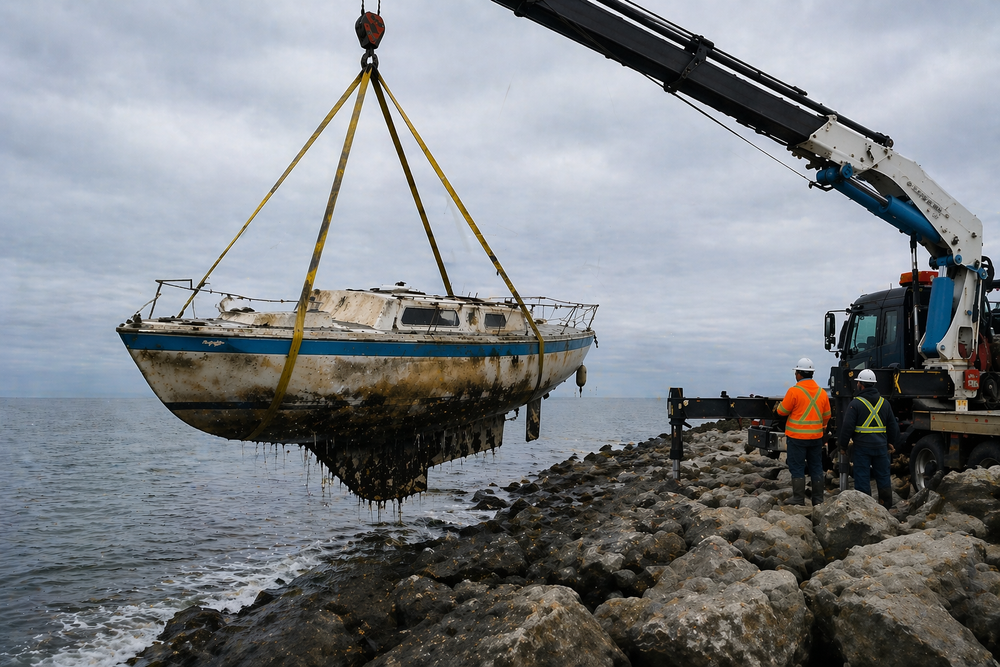
Cost is a significant factor as well. Removing a grounded vessel—particularly from a rocky shoreline—can require specialized equipment, cranes, or barges. Depending on the size and condition of the boat, costs can quickly escalate into the tens of thousands of dollars.
Because of this, not every vessel is immediately prioritized for removal.
In the meantime, these boats remain where they landed; exposed to weather, gradually deteriorating, and becoming more visible with each passing day.
For those who live near or regularly use the shoreline, the delay can feel frustrating. But the system is designed to balance urgency, responsibility, and cost, rather than respond instantly in every case.
Still, as more vessels appear along Kitsilano Beach and near the False Creek entrance, the question continues to surface:
Is the current process working as intended, or is it simply too slow for the realities on the water?
Editor: Karalee Greer
LinkedIn: https://www.linkedin.com/in/karalee/
Subscription to Vancouver News and being a Contributor is Free.
Tags: #Vancouver City News #Kitsilano #False Creek #Karalee Greer #Recreational Boating #Vancouver Beaches #Community News