By Karalee Greer | Vancouver City News | November 11, 2026
Subscription to Vancouver News is Free Being a Contribuor (Writer) is Free
More than a century after John McCrae wrote his famous poem, its message of sacrifice, remembrance and responsibility feels especially meaningful in a troubled world.
Every November 11, Canadians pause to remember. We wear red poppies. We gather at cenotaphs. We lower our heads for two minutes of silence.
But this year, Remembrance Day feels particularly poignant to me.
As I look around the world and see wars continuing, families displaced, communities destroyed and uncertainty about what lies ahead, I find myself thinking more deeply about the people who gave their lives in the hope of a better future.
The freedoms we enjoy in Canada did not come without sacrifice.
And perhaps that is why the words of a Canadian doctor, written more than 110 years ago on a battlefield in Belgium, still speak so powerfully to us today.
The Canadian Behind In Flanders Fields
John McCrae was born in Guelph, Ontario, on November 30, 1872.
He became a physician, teacher and soldier, serving in the South African War before returning to military service during the First World War. In the spring of 1915, McCrae was serving as a medical officer near Ypres, Belgium, during one of the war's most devastating battles.
He witnessed suffering that few of us can imagine. Day after day, wounded soldiers arrived for treatment. Many were young men who had left their homes and families to serve overseas.
On May 2, 1915, McCrae's friend, Lieutenant Alexis Helmer, was killed in action. Helmer was buried in a makeshift grave marked by a simple wooden cross. The following day, May 3, McCrae wrote the poem that would become one of Canada's most enduring contributions to the world's remembrance traditions.
He called it In Flanders Fields.
In Flanders Fields
By Lieutenant-Colonel John McCrae, May 1915
In Flanders fields the poppies blow
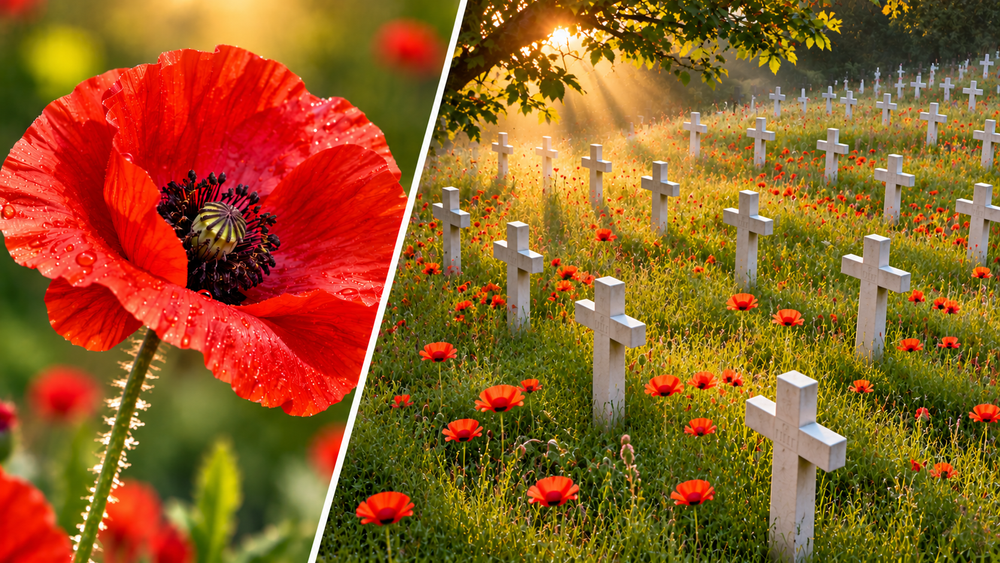
Between the crosses, row on row,
That mark our place; and in the sky
The larks, still bravely singing, fly
Scarce heard amid the guns below.
We are the Dead. Short days ago
We lived, felt dawn, saw sunset glow,
Loved and were loved, and now we lie
In Flanders fields.
Take up our quarrel with the foe:
To you from failing hands we throw
The torch; be yours to hold it high.
If ye break faith with us who die
We shall not sleep, though poppies grow
In Flanders fields.
A Poem Born From Grief
In just fifteen lines, McCrae captured an extraordinary contrast. Bright red flowers growing among the graves of fallen soldiers. Life continuing in a place marked by death.
His poem gave a voice to those who could no longer speak for themselves.
It reminded readers that the fallen had once been ordinary people. They had watched sunrises, loved their families and imagined futures that war would never allow them to experience.
First published in December 1915, the poem quickly became internationally known. McCrae would not live to see the end of the war. He died of illness in France on January 28, 1918, while still serving.
But his words lived on.
Why We Wear the Red Poppy
Today, the red poppy is one of the most recognizable symbols of remembrance. Its meaning is closely connected to McCrae's poem.
Poppies grew in the disturbed soil of the Western Front, where countless soldiers had fought and died. The flower came to represent both the lives lost and the responsibility of future generations to remember them.
When we pin a poppy to our clothing, we are doing more than observing a tradition. We are acknowledging the human cost of war. We remember the Canadians who died in the First and Second World Wars, the Korean War, Afghanistan and other military operations.
We also honour those who served and returned home carrying physical and emotional wounds, and the families whose lives were forever changed.
What Does It Mean to Carry the Torch Today?
One of the most powerful ideas in McCrae's poem is the passing of a torch from one generation to the next.
Written during wartime, the poem called on those still living to continue the struggle faced by the fallen.
Today, we can also reflect on that torch as a responsibility to preserve memory, protect human dignity and work toward a more peaceful future. We honour sacrifice when we learn our history. We honour it when we listen to veterans and their families. We honour it when we teach younger generations why November 11 matters.
And we honour it when we remember that behind every casualty of war is a person with a name, a family and a life that mattered.
Remembering Across the Lower Mainland
Throughout Vancouver, Burnaby, Richmond, Surrey, Langley, Coquitlam, the North Shore and communities across the Lower Mainland, people gather each November 11 to pay their respects.
Some attend ceremonies at local cenotaphs.
Others watch commemorations from home, visit memorials or observe a moment of silence with family.
For children and young people, Remembrance Day provides an opportunity to ask questions about Canada's history and the meaning of service.
For older generations, it may bring memories of parents, grandparents, friends or loved ones who served.
However we choose to remember, the meaning remains deeply personal. This year, with so much unrest in the world, I feel an even greater need to pause and reflect. I think about those who never returned home. I think about the families who waited for loved ones who would never walk through their doors again. And I think about the responsibility we have to ensure their sacrifices are never forgotten.
At 11 a.m. on November 11, when we observe two minutes of silence, I hope we will remember not only those who died, but also the peace they never had the opportunity to enjoy.
May we never take our freedoms for granted. May we never forget the cost of war. And may we continue to hope, and work, for a world where fewer families must endure such loss.
Lest We Forget.
Editor: Karalee Greer | Vancouver City News LinkedIn: https://www.linkedin.com/in/karalee/
Subscription to Vancouver News is Free Being a Contribuor (Writer) is Free
Tags: #Vancouver City News #Remembrance Day #In Flanders Fields #Canadian History #Lest We Forget #Veterans #Karalee Greer
Sources
- Veterans Affairs Canada — John McCrae
- Veterans Affairs Canada — In Flanders Fields
- Veterans Affairs Canada — 10 Quick Facts on In Flanders Fields
- Canadian War Museum — Remembrance: In Flanders' Fields
- Parks Canada — Lieutenant-Colonel John McCrae National Historic Person
- Department of National Defence — Remembrance Day: In Flanders Fields