Karalee Grer | Vancouver City News | June 12, 2026
Subscription to Vancouver News is Free Being a Contributor is Free

Millions of people visit Stanley Park each year to enjoy its forests, beaches, seawall, gardens, and spectacular views. Yet beneath one of Vancouver's most beloved landmarks, a massive infrastructure project is quietly taking shape that most residents know little about.

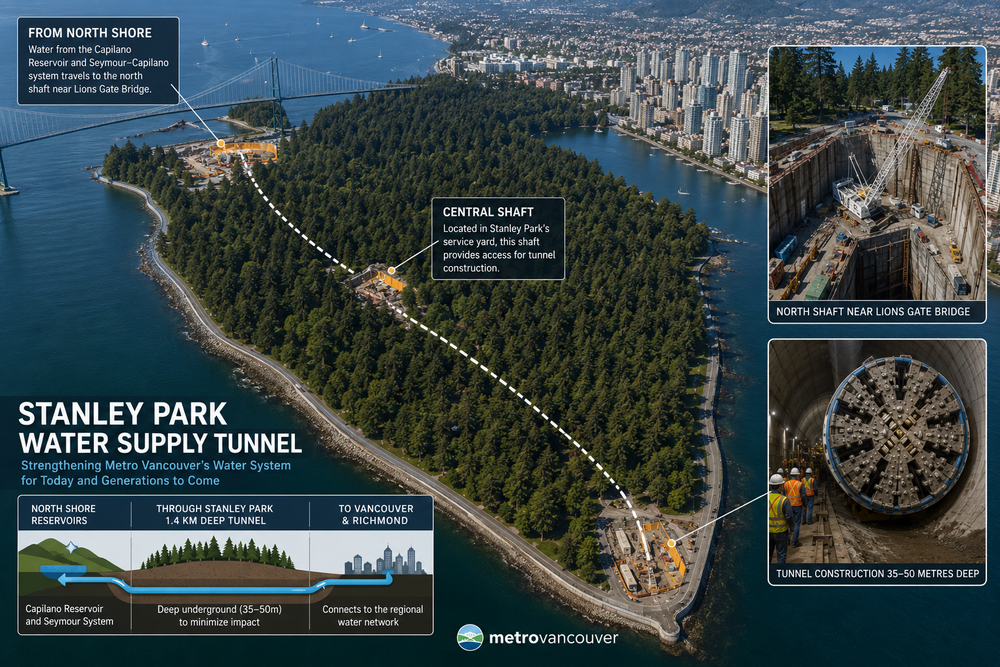
The Stanley Park Water Supply Tunnel is one of the largest water infrastructure projects currently underway in Metro Vancouver. While construction activity has occasionally caught the attention of park users, few realize the scale of what is being built beneath the surface or the important role it will play in the region's future.

The project is part of Metro Vancouver's long-term strategy to modernize and strengthen the drinking water system that serves more than 2.7 million residents.

At first glance, it may seem surprising that a major water tunnel is needed in a city surrounded by water. However, as Metro Vancouver recently moved into Stage 3 water restrictions, the importance of reliable infrastructure has become increasingly apparent.

The region's drinking water comes from three protected mountain watersheds: Capilano, Seymour, and Coquitlam. Once treated, that water must be transported through an extensive network of reservoirs, tunnels, and water mains before reaching homes and businesses throughout the Lower Mainland.

Much of that infrastructure was built decades ago.

As Metro Vancouver's population continues to grow and concerns about earthquake resilience increase, regional planners have been investing billions of dollars in upgrades designed to improve reliability, capacity, and emergency preparedness.

The Stanley Park Water Supply Tunnel is a key piece of that plan.

The new tunnel will replace aging water infrastructure that currently runs through Stanley Park and beneath Burrard Inlet. Once completed, it will form part of a more resilient water transmission system connecting major supply routes serving Vancouver and Richmond.

Unlike traditional open-cut construction, tunnelling allows crews to work deep underground with less disruption to the park's natural environment and visitor experience. The tunnel is being constructed using specialized equipment designed to excavate beneath the park while minimizing impacts above ground.

One of the primary motivations behind the project is seismic safety.

Metro Vancouver sits within an active seismic zone, and engineers have long recognized the need to strengthen critical infrastructure against the possibility of a major earthquake. Water systems are among the most important services needed following a disaster, supporting firefighting, hospitals, emergency shelters, businesses, and residents.

The new tunnel is being designed to provide a more secure and resilient water connection that can better withstand seismic events than some of the older infrastructure currently in service.

The project also addresses future demand.

Metro Vancouver is expected to welcome hundreds of thousands of additional residents over the coming decades. While conservation measures and efficient water use remain important, the region must also ensure that sufficient infrastructure exists to move water where it is needed.

For many residents, infrastructure projects rarely attract attention until something goes wrong. Roads, sewers, electrical systems, and water lines often remain out of sight and out of mind. Yet these systems form the foundation that allows cities to function.

The Stanley Park Water Supply Tunnel offers a reminder that maintaining a growing metropolitan region requires constant investment in assets that most people never see.

When completed, visitors walking the seawall or enjoying Stanley Park's natural beauty may have little indication that a critical piece of Metro Vancouver's water system lies beneath their feet.

And perhaps that is the ultimate measure of success.

The best infrastructure often goes unnoticed, quietly performing its job day after day while supporting the millions of people who depend on it.

As Metro Vancouver faces the challenges of population growth, climate change, and earthquake preparedness, projects like the Stanley Park Water Supply Tunnel are helping ensure that clean, reliable drinking water continues to flow for generations to come.

Karalee Greer
LinkedIn: https://www.linkedin.com/in/karalee/
Subscription to Vancouver News is Free Being a Contrubutor is Free

Tags: #Vancouver City News #Stanley Park #Metro Vancouver #Water Infrastructure #Water Tunnel #Climate Change #British Columbia #Karalee Greer

Share this article
The link has been copied!