By Sherri Claydon | Vancouver City News | October 27, 2026

Subscription to Vancouver News and being a Contributor is Free

Vancouver's infrastructure investment reaches far beyond construction sites. Aging community centres, bridges, fire halls and underground systems affect the services residents and businesses use every day.

Vancouver voters have approved up to $790 million in borrowing to help finance the city's $3.5-billion capital plan for 2027–2030. The official results, confirmed October 21, cover $292 million for transportation and streets, $438 million for community-serving and essential civic infrastructure, and $60 million for parks and public spaces.

The plan includes work on recreation facilities, major crossings, emergency-service buildings and underground pipes. Some projects are already underway; others remain in planning or design.

When Recreation Facilities Fail, Communities Feel It

A swimming pool closes for three months. An arena loses two months of its ice season. For the people who use these facilities, aging infrastructure is already affecting daily life.

Vancouver's 2027–2030 Capital Plan includes approximately $558 million for community facilities, including about $496 million for recreation facilities. The approved borrowing authority includes $338 million for community-facility renewal and upgrades.

The Park Board oversees 55 recreation facilities: 25 community centres, nine ice rinks, nine indoor pools, five outdoor pools and seven specialty facilities. Together, they have an estimated replacement value of $2.1 billion.

These facilities offer swimming lessons, skating, sports, fitness, arts, childcare, preschool programs and community activities. Children learn new skills, families have affordable recreation options, and older residents have places to stay active and connected.

A September 2025 Auditor General's report found that 72% of the 46 recreation facilities assessed were in poor or very poor condition, based on 2022 asset information. The audit identified an estimated annual infrastructure funding deficit of $33 million.

At Kerrisdale Pool, a main drain piping failure discovered during scheduled work led to a three-month closure. Programs were cancelled and user groups displaced.

At Kerrisdale Arena, a brine-line failure required excavation and repairs, costing approximately two months of the 2025–26 ice season. Some figure-skating and minor-hockey activities could not be accommodated elsewhere.

For children learning to swim, families who rely on regular activities, and skaters and hockey players who train throughout the season, these closures mean missed opportunities and disrupted routines. When another facility cannot accommodate the programs, those activities may stop until repairs are completed.

Hastings Community Centre: High Demand in an Aging Building

Hastings Community Centre receives approximately 160,600 visits a year and has program waitlists of about 1,200. Parts of the building date to 1936, although most of the centre dates to 1957.

The centre is classified as being in very poor condition. Its aging, disjointed layout creates accessibility barriers for seniors, families and people with mobility challenges.

Hastings offers childcare, preschool activities, recreation and fitness programs, sports, youth activities, family programming and services for older residents.

Demand remains high, even as the building's condition and layout make it harder for some residents to use.

Kensington Community Centre: 91,800 Visits Across Generations

Kensington Community Centre recorded approximately 91,800 annual visits, although its building is also classified as being in very poor condition.

The centre has a swimming pool, childcare and preschool services, fitness facilities, seniors' programs, dance and pottery studios, and other recreation activities.

Together, Hastings and Kensington recorded more than 250,000 annual visits.

Vancouver's capital planning identifies Hastings, Kensington, Dunbar, Kerrisdale and Roundhouse among five community-centre renewal priorities. The plan also includes planning and design for new public pools.

The investment extends into parks and public spaces. The borrowing approval includes $60 million for this infrastructure, while Park Board capital planning identifies approximately $223 million for parks and open spaces. Planned work includes sports fields, playgrounds, public washrooms and seawall maintenance.

For Vancouver families and neighbourhoods, an important question is how to keep recreation and community services available while aging facilities are renewed.

Keeping Vancouver Moving Means Maintaining Connections

A bridge closure or major road disruption affects more than the people travelling across it. Deliveries, customer access, commuting and public transportation all depend on reliable connections.

Vancouver's 2027–2030 Capital Plan allocates approximately $703 million to streets and transportation infrastructure. The borrowing approval includes $154 million for bridges and structures, $92 million for pavement and sidewalks, and $46 million for traffic signals and street lighting.

The work addresses aging materials, corrosion, traffic loads and seismic risks across infrastructure used by motorists, pedestrians, cyclists, transit users and commercial vehicles.

Granville Bridge: Protecting a Crossing Built in 1954

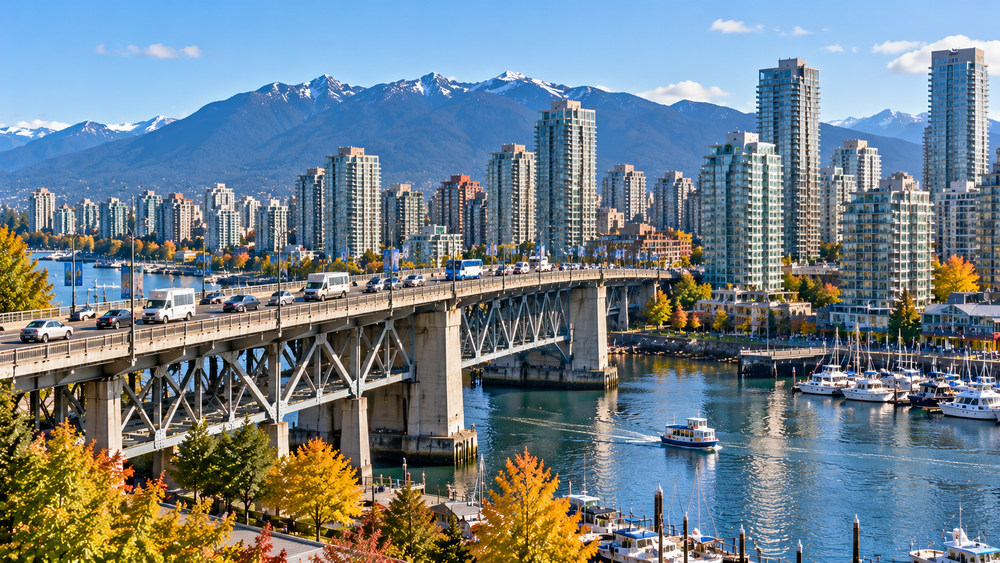
More than 70 years after it opened, Granville Bridge is undergoing structural repairs and protective recoating to address corrosion.

The current phase began in March 2026 and is expected to continue into early 2027. According to the city, the renewed protective coating should last approximately 30 to 40 years with regular maintenance.

Work beneath the bridge near Granville Island and the False Creek seawall involves temporary pedestrian and cycling detours. The city has indicated that access to nearby businesses will be maintained.

Cambie Bridge: Preparing for an Earthquake

Cambie Bridge is being strengthened to improve its ability to withstand earthquake forces.

The work includes seismic upgrades to piers and foundations, along with other repairs. Phase 2 began in early 2026 and is expected to continue until spring 2028.

The bridge remains open during construction, although portions of nearby public spaces, including Coopers' Park, are affected.

Vancouver's Fire Halls Face Problems Behind the Bay Doors

Twelve Vancouver fire halls lack central cooling. Nine have not undergone seismic upgrades. Electrical systems at or near capacity are making it difficult to add equipment used to clean firefighters' protective gear.

The city reported these findings in May 2026 as part of a broader review of Vancouver Fire Rescue Services facilities.

Fire halls need space for firefighters, emergency vehicles, protective equipment, training and daily operations. The city's presentation also identified aging buildings with inadequate space, working-condition concerns and limitations affecting firefighter well-being.

The October borrowing approval includes $100 million for other community-serving and essential civic facilities, including fire halls, service yards and cultural facilities. The broader capital plan includes construction of a new four-bay fire hall.

Firehall No. 2: A 1974 Building Facing Modern Demands

Built in 1974, Firehall No. 2 at 199 Main Street has reached the end of its service life and no longer meets current seismic, staffing and operational requirements, according to the city.

Emergency-response demand has increased, and the building has limited space for modern equipment.

Vancouver plans to replace it with a four-bay fire hall at 496 Alexander Street, designed for current emergency-response needs.

Planning and design work is underway.

Vancouver's Biggest Infrastructure Investment Is Underground

Nearly $1 billion of Vancouver's capital plan is directed toward systems most people rarely see.

The 2027–2030 Capital Plan allocates approximately $989 million to drinking-water, rainwater and wastewater infrastructure.

These systems supply water, manage drainage and carry wastewater from homes, businesses, schools and public buildings.

Some older parts of Vancouver have combined sewers that carry rainwater and wastewater through the same pipes. During heavy rainfall, limited capacity can increase flooding and water-quality risks.

Separating the systems improves capacity and helps reduce those risks. Aging pipes also need repair or replacement beneath streets, parks and neighbourhoods.

Memorial West Park: New Pipes, Park Still Open

At Memorial West Park, crews completed underground sewer work while keeping the park open and preserving more than 20 mature trees.

They used trenchless construction methods to reduce the amount of digging required.

In August 2026, Vancouver reported on three sewer projects valued at approximately $18 million under its previous 2023–2026 Capital Plan. Another project in Shaughnessy separated approximately 5.8 kilometres of combined sewer infrastructure.

The Work Behind Vancouver's Infrastructure Investment

Repairing and replacing infrastructure involves more than the crews people see at construction sites.

Community-centre renewal requires architects, engineers, contractors, electricians, plumbers, carpenters and equipment suppliers. Bridge repairs involve structural specialists, skilled trades, machinery and materials. Water and sewer projects require underground utility contractors, pipe suppliers and equipment operators.

Housing, Infrastructure and Communities Canada reported that infrastructure investment supported approximately 665,000 direct and indirect jobs across Canada in 2023, including about 332,000 in construction.

The federal government's B.C. construction-sector profile reported approximately 246,800 people employed in the province's construction industry in 2024, contributing approximately $28.8 billion to provincial GDP.

These figures describe national infrastructure employment and B.C.'s wider construction industry. They do not measure the jobs Vancouver's capital plan will generate.

For local contractors, skilled trades, engineering firms, suppliers and professional-service businesses, the plan represents several years of potential work. The opportunities available will depend on project schedules, procurement decisions and funding.

Why It Matters

The quality of a city's infrastructure affects the people who live, work and visit there.

Community centres give children places to learn to swim, skate and develop skills. They support physical and mental health, offer affordable recreation and bring neighbours together across generations.

Bridges connect people to jobs, businesses, schools, services, family and friends. In Vancouver, where earthquake risk is a serious consideration, maintaining and strengthening those connections is essential.

Fire halls give firefighters the facilities they need to protect communities, while reliable water and sewer systems support homes, businesses, public health and the environment.

Infrastructure investment also supports a substantial part of the economy. Across Canada, infrastructure spending supported approximately 665,000 direct and indirect jobs in 2023. In British Columbia, the construction industry employed approximately 246,800 people and contributed $28.8 billion to provincial GDP in 2024. Delivering Vancouver's capital plan will require skilled trades, contractors, engineers and suppliers.

The city's public spaces and transportation connections also contribute to its appeal as a destination. According to Destination Vancouver, the city welcomed approximately 11.3 million overnight visitors in 2025, and its tourism economy generated $8.8 billion in revenue. Maintaining the places people visit and the infrastructure they use helps Vancouver continue to welcome visitors.

This investment is about more than repairing aging buildings, bridges and pipes. It's about keeping Vancouver a city where people can connect, stay healthy, pursue opportunities and build their futures.

By Sherri Claydon | Vancouver City News

LinkedIn: https://www.linkedin.com/in/sherriclaydon

Subscription to Vancouver News and being a Contributor is Free

Source Information

City of Vancouver

Government of Canada

Destination Vancouver

Tags: #Sherri Claydon #Vancouver City News #Infrastructure Investment #Capital Plan #Community Centres #Construction Industry #British Columbia

Share this article
The link has been copied!