Most Vancouver small business owners have heard the term. Fewer know what it means. Knowing changes how you use it.

By Keith Donoghue | Vancouver City News | July 24, 2026
Editor: 
Karalee Greer
Subscription to Vancouver News and being a Contributor is Free

What A Large Language Model Actually Does

A Vancouver clinic owner has been hearing about AI for two years. She uses Google every day. She knows what ChatGPT is. She does not know what a large language model is, why it behaves the way it does, or why that matters for her business.

Most explanations start with the technology. This one starts with what it does.

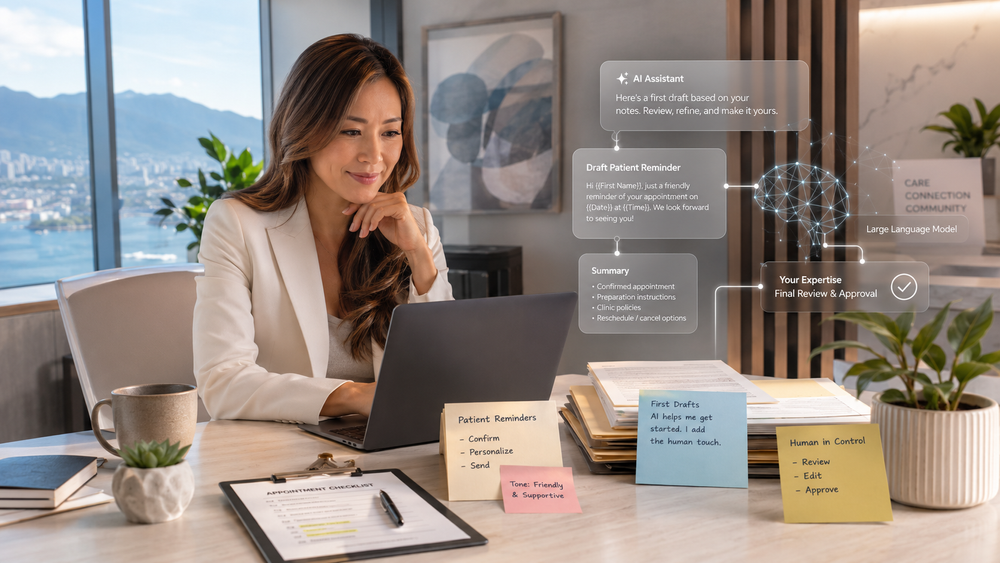
When a clinic owner types a request into ChatGPT, the model reads the text and produces a response. It can draft a patient reminder, summarise a clinical note, or write a reply to an enquiry. It does this because it has processed an enormous volume of human-written text and learned patterns from it. When it sees a request, it predicts what a useful response looks like based on everything it has read.

That is what a large language model is. Not a search engine. Not a database. A prediction engine trained on language.

For a Vancouver clinic this has a practical meaning. The model does not look up the answer to a question. It produces text that fits the pattern of a useful answer. That is why it can draft a patient reminder in seconds. That is also why it can occasionally produce something plausible that is wrong.

Understanding that distinction matters before using it in any business workflow. The output needs a human review step. Not because the tool is unreliable in general. Because it produces confident-sounding text regardless of accuracy, and the responsibility for what goes to a patient or a client remains with the practice.

The right way to use a large language model in a small business is as a first draft engine. It produces something that is most of the way there. The owner or a staff member takes it the rest of the way. That division of labour is where the time saving comes from. Not from removing the human from the process. From removing the blank page.

Keith Donoghue | Vancouver City News Keith Donoghue is the founder of Highridge AI Consulting, helping Vancouver small businesses reduce manual work and run more efficient operations.

Website: Highridge AI Consulting
Email: keith@highridgeai.com
LinkedIn: keith-donoghue
Video Examples: Highridge AI Video Examples
Instagram: @highridgeaiconsulting
Facebook: Highridge AI Consulting

Editor: Karalee Greer
Subscription to Vancouver News and being a Contributor is Free

Tags: #Vancouver City News #Keith Donoghue #Vancouver Business #Small Business #Automation #AI Tools #Productivity #Entrepreneurship

Share this article
The link has been copied!