By Sherri Claydon | Vancouver City News | October 1, 2026

Subscription to Vancouver News and being a Contributor is Free

B.C. is reviewing proposals for new AI data centres seeking close to 800 megawatts of electrical capacity. The projects could bring investment and new business opportunities, but what infrastructure will they need?


Using AI can feel almost effortless. Type a question into a phone or computer, and an answer appears within seconds. Behind that response is a physical network of computing equipment, data centres and electricity infrastructure.

British Columbians can use AI services powered by data centres anywhere in the world. But companies are also proposing to build that computing capacity here, raising questions about the electricity required and the business opportunities that could come with it.

BC Hydro received 15 applications for large AI and data-centre projects requesting close to 800 megawatts of electrical capacity through its 2026 competitive process.

The Demand Is Becoming Visible

The requested capacity is approximately twice the 400 megawatts (MW) available through BC Hydro's initial allocation. Of that amount, 300 MW is designated for AI data centres and 100 MW for conventional data centres.

A megawatt measures electrical power, not actual electricity consumption. The applications indicate how much capacity developers are seeking, rather than how much electricity their facilities are already using.

The figures reflect a specific allocation process. Some projects that advanced through BC Hydro's connection process before the new rules took effect are exempt, and the 400 MW allocation is not a limit on the province's total electricity supply.

How B.C. Is Preparing

In January 2026, the province introduced a competitive process for allocating electricity to large AI and data-centre projects. Projects are assessed based on price and their economic, community, data-sovereignty and environmental benefits.

The process includes feasibility studies to determine how proposed facilities could connect to the electricity grid and what upgrades may be required.

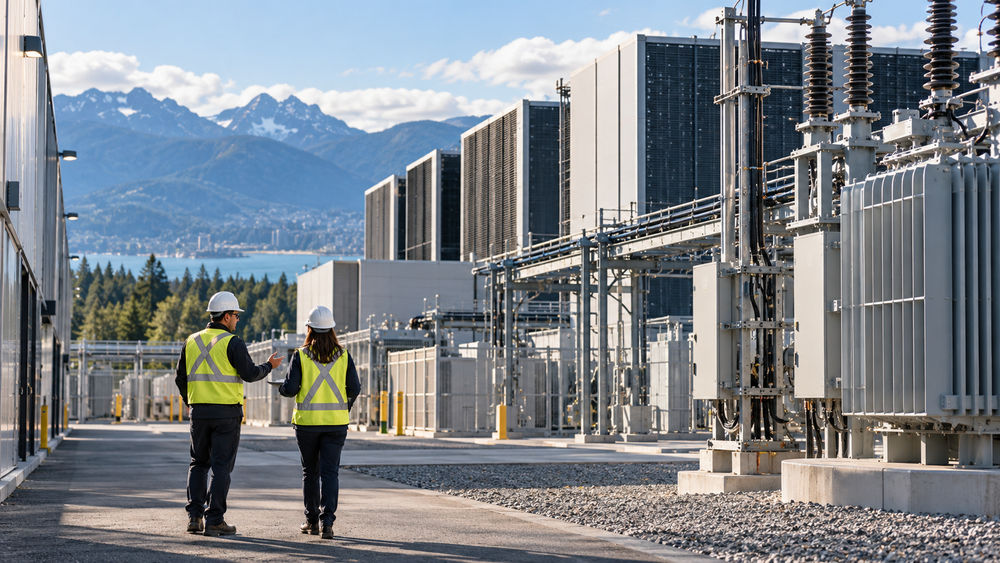
A large data centre needs more than a reliable electricity supply. Depending on its location and power requirements, it may need new transmission connections, substations or upgrades to existing infrastructure. The computing equipment also generates considerable heat, making cooling systems an important part of facility design and electricity demand.

Even after receiving an electricity allocation, developers must complete the engineering, financing and construction work needed to bring their facilities into operation. For large projects, that process can take years.

B.C. Is Planning for Broader Electricity Growth

Data centres are entering an electricity system already preparing for increased demand.

In its 2025 Integrated Resource Plan, BC Hydro projected electricity demand would grow by approximately 15% by 2030, driven by population growth, industrial expansion and the shift toward cleaner energy.

Its longer-term plans include acquiring additional renewable electricity, improving energy efficiency and upgrading existing generating facilities. Construction is now underway on a sixth generating unit at Revelstoke Dam that will add 500 MW of capacity. BC Hydro also plans to modernize five generating units at the G.M. Shrum Generating Station, adding another 100 MW.

These investments are part of BC Hydro's broader plans to meet growing electricity needs across the province, including demand from homes, businesses and industry.

Why It Matters

What Could B.C. Gain From Building AI Capacity?

B.C. businesses can use AI services hosted anywhere in the world. Building computing capacity locally, however, creates opportunities beyond using the technology.

Data-centre development could bring private investment, construction work and demand for local engineering, electrical and technical services. Once operational, facilities could provide ongoing employment and sell computing services to customers across Canada and internationally.

Local capacity could also give B.C. researchers, AI developers and technology businesses another source of the computing power they need.

In May 2026, the federal government announced it was advancing work with TELUS on a proposed large-scale AI data centre in B.C. as part of its initiative to expand Canadian computing capacity. The proposal illustrates growing interest in building that infrastructure here, although its economic benefits have yet to be established.

The Value of Keeping Computing Capacity in Canada

For some organizations, Canadian-based computing infrastructure offers advantages related to data residency and access to domestic services. Location alone does not guarantee Canadian control, however. Ownership, contracts and data protection measures also matter.

B.C.'s allocation process considers these factors alongside economic benefits, infrastructure costs and environmental considerations. The province is weighing how much value proposed facilities could generate relative to the electricity they require, including investment, employment and opportunities for local businesses.

The applications represent an opportunity to build infrastructure that could serve customers well beyond B.C., with the economic benefits depending on which projects move forward.

B.C. can use AI powered elsewhere. Could we build computing power others want to use?

By Sherri Claydon | Vancouver City News LinkedIn: https://www.linkedin.com/in/sherriclaydon

Subscription to Vancouver News and being a Contributor is Free

Source Information


Tags: #Sherri Claydon #Vancouver City News #Artificial Intelligence #Data Centres #British Columbia #Electricity #Infrastructure #BC Hydro

Share this article
The link has been copied!