
Claire Wetmore
By Claire Wetmore | Vancouver City News | September 28, 2026 Editor: Karalee Greer
Subscription to Vancouver News and being a Contributor is Free
Every generation solved its own money crisis, then passed the advice down as timeless wisdom. It rarely survives the handoff.
Opening
There's an old story about a woman who always cut the roast in half before putting it in the pan. Her daughter watched her do it for years before finally asking why. "Because that's how your grandmother did it," she said. So they called grandma. And grandma laughed and said she only ever did that because her pan was too small to fit a whole roast.
Two generations followed an instruction perfectly, with total discipline, long after the actual reason for it had disappeared. Nobody was foolish for doing it. It worked. It just wasn't wisdom — it was a workaround for a specific pan, mistaken for a rule about cooking roasts.
Money moves through families exactly the same way. We hand down a house, a ring, a name, a set of instructions muttered at the kitchen table — save your pennies, don't touch the principal, cash is safer than the market — and we rarely hand down the actual pan or the specific emergency that made those instructions true in the first place. The advice outlives its context. And then someone two generations later follows it exactly, in a completely different economy, and can't understand why it isn't working.
It's not that our elders were wrong. It's that every generation has been handed a different emergency, and they solved it with whatever was in front of them at the time. The advice that came out the other side was correct — for that fire, in that decade. Nobody updated the instructions for the fire coming next, because nobody could see it.
The generation that learned to hoard
Our great-grandparents' generation came of age during what Canada came to call the Dirty Thirties. Unemployment climbed toward 30% of the labour force by the depth of the Depression, a punishing drought turned the Prairies into a dust bowl, and the country's total economic output fell by more than 40% between 1929 and 1933. Roughly one in five Canadians ended up dependent on government relief just to get by, in a country that had almost no social safety net yet to catch anyone. Unemployment stayed above 12% right up until the country entered the Second World War in 1939.
Out of that came a specific, hard-earned instinct: keep cash where you can see it. Don't trust institutions further than you have to. Waste nothing. It wasn't a personality trait — it was triage, learned the hard way, and it worked exactly as intended. It kept a generation solvent through a decade that came close to bankrupting the whole country. It also, decades later, left plenty of their grandchildren staring at a savings account that had never once touched the market, wondering why the number never seemed to grow.
The generation that got the rug pulled mid-sprint
Their kids — the ones who'd come of age expecting the postwar boom to keep going — hit the 1970s instead. OPEC's oil shocks sent the price of a barrel of oil from around $3 to $40 over the course of the decade. Inflation climbed into the double digits, and Ottawa's answer — wage and price controls imposed in 1975 after being campaigned against just a year earlier — was unpopular enough to trigger the largest labour protest in Canadian history, with more than a million workers walking off the job in a single day in October 1976.
Then, just as this generation was trying to buy their first homes, the real blow landed: the Bank of Canada's rate peaked above 21% in August 1981, five-year mortgage rates climbed past 18%, and unemployment rose to roughly 13% by the end of 1982. Homeowners who'd bought at one rate found themselves renewing at nearly double it a few years later. It was an economy that had never behaved that way before, and one that took the better part of a decade to fully recover from.
Their answer was a dogged optimism married to real estate anyway: buy the house, absorb the punishing renewal, ride it out, believe the market will eventually reward patience — because eventually it did. It was the right call for the economy they were actually living in. It becomes a much harder instruction to follow once housing costs stop moving at the same pace as everything else.
The generation that raised itself
Their kids grew up right as the shape of the Canadian family changed underneath them. The 1968 Divorce Act made splitting up legally possible without the older, narrower grounds; the 1985 revision made it considerably easier still. The divorce rate rose more than tenfold in under three decades — from about 36 divorces per 100,000 people in 1961 to a peak of over 360 per 100,000 by 1987. An entire generation of kids came home after school to empty houses, both parents working through an economy that had just been through its own gauntlet of double-digit interest rates and job losses, with no one home to check in.
What that generation learned wasn't financial advice so much as a whole orientation: don't expect anyone to hand you anything, don't expect a system to catch you, figure it out yourself, be quietly self-sufficient about it. It's a strong survival skill. And it's something a lot of people took to heart. But it makes for advice that sounds like "just be tougher" to a kid who's asking a much more specific question about student loans.
The generation that did everything "right" and got the floor pulled out anyway
Then came a generation that was told, explicitly, that the fix for economic uncertainty was more school. Go to college. Get the degree. That's the ticket. Many of them did exactly that, borrowed to do it, and walked directly into the 2008–09 recession right as they were trying to start careers. Student unemployment hit a record 20.9% in the summer of 2009 — the highest rate recorded since Statistics Canada started tracking the number in 1977 — while tuition had already been climbing at nearly double the rate of inflation for the decade leading up to it. Canadians carrying student debt today owe an average of roughly $28,000, and government-held student debt alone now tops $20 billion nationally.
What a lot of them learned, in the end, was to distrust the instruction itself. Not education, but the specific promise that a four-year degree was an automatic, low-risk ticket to a stable life, worth almost any price tag to obtain. Watching that promise fail to pay off on schedule produced a hard swing in the opposite direction: a growing number steering their own kids, and themselves, toward trade school, apprenticeships, or skipping the degree entirely in favor of going straight into the workforce.
It's the same pattern as every generation before them — a real, painful lesson treated as the new permanent rule. Whether "skip college" turns out to be more durable advice than "get the degree" was, it's still the kind of thing we won't know for certain until the next generation tests it against whatever the economy brings next.
The generation handed a device instead of a map
Behind them is a generation that came up watching all of this from the inside — the recession's aftermath, the gig economy replacing steady jobs, a pandemic that hit right as they were entering the workforce, and now an AI-shaped job market nobody can fully predict yet. Nearly three-quarters of Canadian high schoolers say outright that they don't have the knowledge to make informed financial decisions, and only about one in five say they actually understand a concept as basic as debt. It's not because they're less capable — most of them will graduate having never taken a course built to teach them otherwise. It's only in the last couple of years that provinces like Ontario have begun making financial literacy an actual graduation requirement, and most of the country still hasn't caught up.
By The Numbers
- Unemployment climbed toward 30% of the Canadian labour force by the depth of the Depression, with output down more than 40% between 1929 and 1933
- Roughly one in five Canadians depended on government relief during the Dirty Thirties
- The price of a barrel of oil rose from about $3 to $40 over the course of the 1970s
- The Bank of Canada's rate peaked above 21% in August 1981, with five-year mortgage rates over 18%
- Canada's divorce rate rose more than tenfold between 1961 and its 1987 peak
- Student unemployment hit a record 20.9% in the summer of 2009, the highest since tracking began in 1977
- Canadians with student debt owe an average of roughly $28,000; government-held student debt tops $20 billion nationally
- Nearly 3 in 4 Canadian high schoolers say they lack the knowledge to make informed financial decisions
Why It Matters
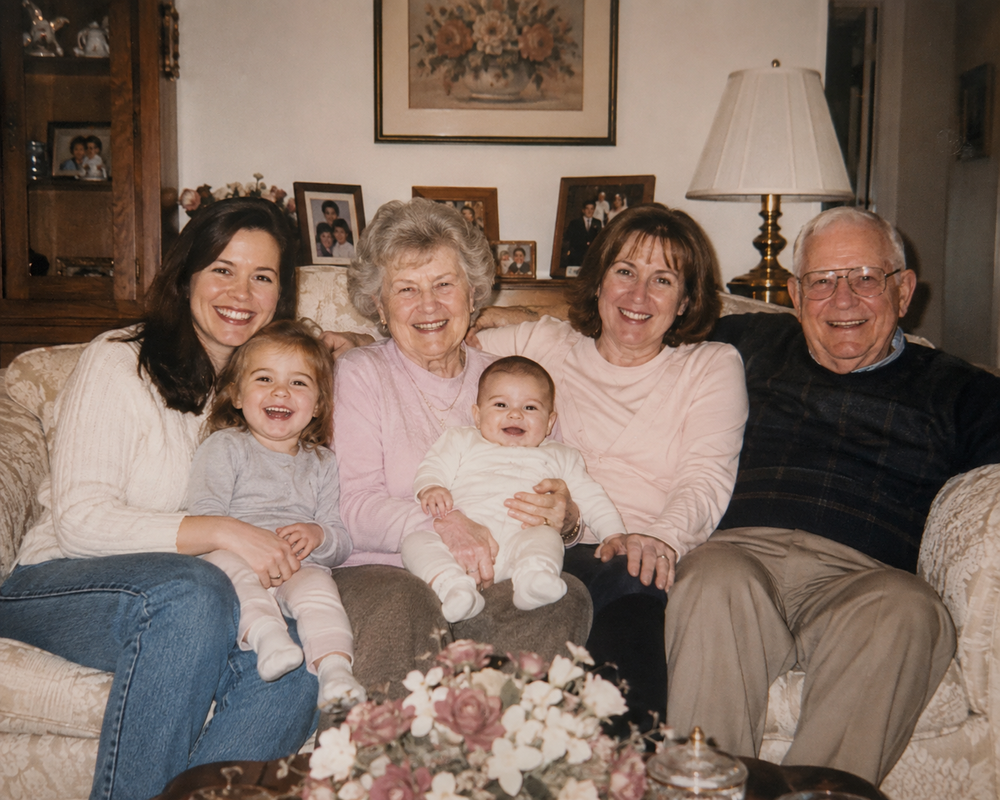
That's the actual reason your grandparents' advice only goes so far. It's not that they're out of touch, or that their generation didn't work hard, or that the porch and the Sunday routine represent a smaller life. It's that they were fighting a fire that isn't your fire, and the instructions for fighting theirs was never going to be a complete manual for yours. Every generation has effectively had to build its own financial survival guide from scratch, in real time, usually a decade too late to avoid the worst of the damage, because nobody sat any of them down beforehand and taught them the actual mechanics of money — just the specific coping strategy their own crisis happened to reward.
That's also, not coincidentally, exactly why money got so hard to talk about in the first place. A family that survived the Depression by never discussing finances openly raised kids who inherited the silence along with the caution. A generation that got wiped out by a recession they didn't cause absorbed some private shame about it. The instructions got passed down. The literacy never did.
None of this is an argument that any generation should have known better. It's an argument for what actually breaks the cycle, and it isn't another decade of each generation quietly reinventing financial competence alone.
It's teaching the actual mechanics — openly and early, to everyone, not passed down as folklore from whichever crisis happened to shape whoever raised you.
- What compound interest actually does over forty years.
- What a diversified portfolio is protecting against.
- Why "the house value will always go up" was true for one specific economy and isn't a law of nature.
- Why a pension made sense in 1965 and now isn't as easily come by.
We're not talking about a values system quietly transmitted through trauma and left unspoken at the dinner table. An actual, teachable skill, given to a person before their crisis arrives instead of afterward.
By Claire Wetmore | Vancouver City News Contact: Claire.rfm@gmail.com LinkedIn: https://www.linkedin.com/in/claire-wetmore-72a74a25a/
My mission in financial education is to teach how to grow, save, and protect your money. My work is grounded in research rather than opinion; I dig into the studies, surveys, and behavioral science behind the way people actually think and act with money, and translate that into guidance that's useful in real life. I write regularly across several publications, covering everything from the psychology of financial shame to the habits that quietly build (or erode) long-term wealth. My goal is simple: help people feel less alone and less overwhelmed when it comes to money, and give them something they can actually use.
Editor: Karalee Greer
Subscription to Vancouver News and being a Contributor is Free
Tags: #Claire Wetmore #WBN News #Financial Literacy #Generational Wealth #Personal Finance