Karalee Greer | Vancouver News | April 13, 2026
Subscription to Vancouver News and being a Contributor is Free.

The ripple effects of the escalating conflict between the United States and Iran became clearer over the weekend, as failed negotiations and a proposed naval blockade sent oil prices sharply higher again.

According to recent reporting, oil surged back above $100 per barrel following the collapse of talks and renewed threats to shipping through the Strait of Hormuz—one of the world’s most critical energy corridors.

For airlines, this is not just a temporary spike. It is a structural cost shock that is already reshaping how air travel operates.

Fuel Is Now the Defining Cost

Jet fuel prices have risen dramatically since the conflict began, with global supply disruptions and rerouted shipping pushing aviation costs significantly higher. The war has disrupted key fuel transit routes and forced airlines worldwide to adjust operations, including longer flight paths and reduced service in some regions.

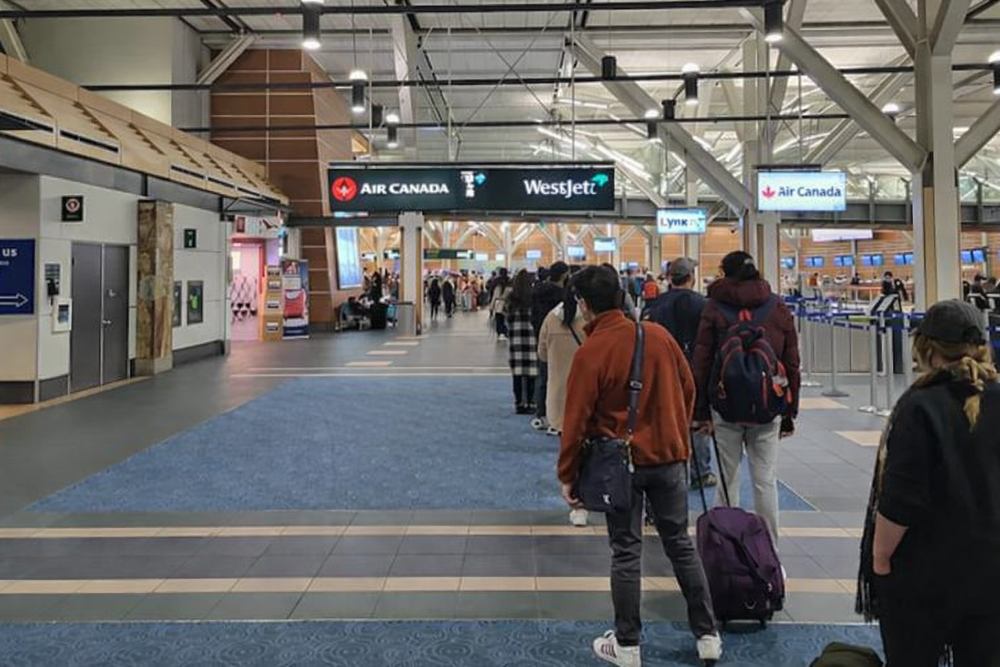
For Canadian carriers like Air Canada and WestJet, this translates into immediate pressure on margins.

Across the industry, airlines are responding with:
• fare increases
• fuel surcharges
• route optimization
• reduced flight frequency

These changes are already being felt by travellers departing from Vancouver.

Vancouver Businesses Are Paying the Price

For Vancouver’s business community, the impact is more than just higher ticket prices.

Corporate travel budgets are being reassessed as flights become:
• more expensive
• less predictable
• more limited in scheduling

This is particularly relevant for:
• consulting firms
• sales-driven organizations
• international businesses
• tourism operators

As costs rise, many companies are shifting toward:
• fewer trips
• longer, more strategic travel
• increased reliance on virtual meetings

This marks a subtle but important shift in how business gets done.

Airlines Are Quietly Changing Their Model

Beyond pricing, the structure of air travel itself is evolving.

Globally, airlines are:
• consolidating routes
• prioritizing high-demand corridors
• reducing underperforming flights

Recent industry responses show carriers cutting capacity and increasing fares to manage fuel volatility, a trend expected to continue if oil remains elevated.

At the same time, services are becoming more “unbundled,” with:
• additional fees for baggage
• seat selection costs
• fewer inclusions in base fares

For travellers, this means the true cost of flying is increasingly layered.

What It Now Costs to Fly Vancouver to Toronto

To understand how quickly costs have shifted, consider one of Canada’s most common routes: Vancouver to Toronto.

Before the recent escalation in the Iran–U.S. conflict, a typical one-way economy ticket in late February was relatively stable.

On Air Canada, travellers could expect to pay roughly $220 to $280 for a base fare. Once standard add-ons were included—such as a checked bag, seat selection, and taxes—the total typically landed between $340 and $420.

WestJet offered similar pricing, often slightly lower on the base fare, with total trip costs averaging between $315 and $405 after basic services were added.

Today, that same flight looks noticeably different.

Base fares have increased modestly, but the bigger shift comes from added surcharges and layered fees. Air Canada flights are now commonly ranging from $260 to $330 before extras. With the addition of a fuel surcharge of approximately $50, plus baggage, seat selection, and taxes, the total cost now typically falls between $440 and $545.

WestJet has followed a similar pattern. Base fares have risen into the $240 to $320 range, with fuel surcharges of around $60 appearing on select bookings. Once standard services are included, total trip costs are now also landing between $430 and $545.

The result is a clear shift in the real cost of travel.

What was recently a $350 flight is now often closer to $500 by the time a traveller completes a standard booking.

Importantly, much of this increase is not immediately visible in headline fares. Instead, it is being distributed across fuel surcharges, service fees, and incremental pricing adjustments—making the overall rise feel gradual, even as the total cost climbs significantly.

Vancouver to Toronto Flight Costs: Before vs Now

What used to be a $350 flight is now often closer to $500 once basic travel costs are added.

AirlineFeb 27 (Pre-Conflict)Today (Post Fuel Surge)
Air Canada$340 – $420$440 – $545
WestJet$315 – $405$430 – $545

What’s Included:
• base fare
• one checked bag
• seat selection
• taxes and fees
• new fuel surcharges (where applicable)

A Longer-Term Shift, Not a Short-Term Disruption

Economic analysts now warn that the impact of the Iran conflict is already “baked into” the global economy, particularly through sustained energy disruption and inflationary pressure.

Even if tensions ease, the volatility introduced into global energy markets is expected to persist.

For Vancouver—a city deeply connected to global travel, tourism, and international business—this could have lasting implications:
• higher travel costs
• shifting tourism patterns
• changes in business mobility

What Comes Next

While Vancouver remains a key gateway city, the economics of air travel are clearly changing. Airlines are adapting in real time. Businesses are adjusting strategies. Travellers are recalibrating expectations. And beneath it all is a new reality:

Air travel is becoming more expensive, more strategic, and more complex, driven not just by demand, but by global forces far beyond the airport.

Editor: Karalee Greer
LinkedIn: https://www.linkedin.com/in/karalee/
Subscription to Vancouver News and being a Contributor is Free.

Tags: #Vancouver City News #Karalee Greer #Airlines #Business Travel #Vancouver #Global Economy #Toronto

Share this article
The link has been copied!